Thursday, January 20, 2005

2005-01-20 New York, NY | The Next Big Thing (WNYC)

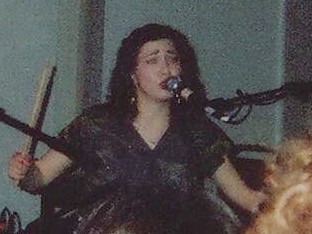
These are the earliest available recorded performances of both "Fidelity" and "Pound of Flesh" (taped prior to her show on 1/21/2005 at the Bowery Ballroom), available from wnyc.org
Pound of Flesh
Fidelity
Genius Next Door

Thursday, December 23, 2004

2004-12-23 Totally Jewish

LINK

New York's Queen Of Cool

by Robert Collins - Dec 23

It’s finally happened. I can’t tell you how or why, but being Jewish has never been cooler. And top of the hip tree right now is Regina Spektor, the new queen of New York, a singer songwriter destined to make 2005 her own.

Coolness, for want of a better expression, is a very transient quality, but the story of Regina suggests that she’s going to be around a lot longer than TV-spawned flashes in the pan like poor Michelle McManus (assuming you even remember her at all).

Born in Moscow in the bad old days of the Soviet Union, Regina spent her formative years learning classical piano and keeping her Judaism as quiet as possible. It was only when the Spektor family relocated to The Bronx district of New York City when the aspiring singer was nine, that her eyes were opened to the possibilities before her.

“When we came to America it was very normal to be a practicing Jew,” she explains. “So, of course, we began exploring all of that.”

Rediscovering her family’s faith went hand in hand with expanding her musical education courtesy of one Sonia Vargas. The young Regina charmed the Manhattan school of music professor into giving her lessons, despite the fact that the immigrant Spektors had no money to pay for them. Or even a piano to practice on.

By 2001 Regina had graduated from New York’s SUNY Purchase College, and was becoming a shining light in the city’s tight-knit (and ludicrously trendy) anti-folk community. The big time beckoned, and it came in the form of an invitation from world famous rock stars The Strokes - who count Jewish guitarist Nick Valensi among their number - to open for them on their American tour. Impressed with what they saw, Regina’s next step on the superstardom escalator was a duet with The Strokes, Modern Girls and Old-Fashioned Men, and a growing buzz around this mystery girl from Russia.

So when third album Soviet Kitsch arrived this summer, there was a growing army of newfound fans waiting to lap it up. They weren’t disappointed. Sitting somewhere between Norah Jones’ keen ear for melody and Tori Amos’ natural weirdness, Soviet Kitsch proved that Sonia and The Strokes were right all along. Songs were subtle, piano-flavoured pieces with echoes of folk, jazz, rock and even snatches of traditional klezmer thrown in for good measure. Because as Regina is fully aware, there’s nothing cooler right now than standing up and asserting your Judaism.

“I still keep kosher and some of the holidays,” she is happy to admit, “But I am not very Orthodox at all. I guess I pick and choose which parts of the tradition to follow, but I always appreciate that I have a choice.”

Smart, sexy and super-talented, Regina Spektor is going to be huge.

Tuesday, December 21, 2004

2004-12-21 Las Vegas Review-Journal

LINK

NIGHT BEAT: Spektor fueled by human emotions

My favorite album of 2004 is Regina Spektor's "Soviet Kitsch." I've listened to it at least 100 times since July. It's mesmerizing.

At http://MySpace.com/ReginaSpektor, fans post notes of devotion. One reads, "I once held the door open for you at tonic and it was the best moment of my life." The comment I favor the most goes, "You kill me."

Fans and critics equate Spektor's approach to other piano players or complex singers who came before her: Bjork. Tori Amos. Cat Power. Joni Mitchell. Patti Smith. Nina Simone. Janis Joplin. Sarah McLachlan.

Spektor has pure honesty of emotions. She's an impetuous and creative pianist, a clever lyricist, and a vocalist who cherishes each syllable as if it were her last breath. This goes for "The Flowers," "Somedays" and every other song on "Kitsch."

In "Chemo Limo," she relates, in her New York-via-Russia accent, a dream in which she and her four well-dressed kids (a fiction, she doesn't have kids) ride in a limo to chemotherapy:

"Sophie only wants to listen to Radio BBC. Michael sat on my knees and whispered to me all about the meanies. Jacqueline was being such a big girl, with her cup of tea, looking out of the window. And Barbara, she looks just like my mom."

Most of the album features Spektor solo. Its first sounds are heart thumps. Her piano bench creaks. And she inhales into the microphone. I got her on the phone several months ago to ask her about this.

"I don't like sterile records at all," she said in a gracious interview. "In some of my favorite (music), you can hear the humans."

In other words, many other musicians and producers edit humanity out of songs, flattening out frequencies and squishing down dynamics and breath.

"They're doing that with everything else, with magazine covers and television. They're taking out pores and skin flaws and everything. And they're trying to extract the human from music," she said. "It's not a secret that all these people -- they eat, they drink, they bleed, they blow their nose, and their piano benches squeak. It's supposed to be there.

"They're just trying to present what they think is a better version of themselves. And sometimes, unfortunately, it's a more bleak or sterile version of themselves, because it's the flaws that really make things exciting. To me, it's (exciting) when Thom Yorke's voice breaks. Or you see he runs out of breath. Or, like, when you hear that in John Lennon's voice, if he goes flat, and it's so good."

I could ""Kitsch" do her bidding. It is available on iTunes, in stores and at Amazon.com and CDUniverse.com, although officially, it gets a U.S. release on Feb. 8.


Doug Elfman's Night Beat column appears on Tuesdays.

Wednesday, December 01, 2004

2004-12 Blender

Unable to display PDF file. Download instead.

THE NEXT BIG THING!

Regina Spektor

A Moscow-born piano-playing whiz kid with the Strokes in her corner

BY PAULINE O'CONNOR

BEFORE SETTLING INTO a Tribeca café, Regina Spektor has one request: Can she switch chairs with Blender? "I feel really weird if I don't get the window seat," she explains. "When I lived in Paris, I got in the habit of hanging out in cafés and watching people walk by."

The gimlet-eyed Spektor has seen a lot in her 24 years. Born in Moscow, she moved with her parents to the Bronx when she was 9. "We came for religious and political freedom. Russia was a very unpleasant place to be Jewish."

In Russia, Spektor's father had been a scientist and her mother a music professor, but both had to take menial jobs to make ends meet in America. Spektor, too, picked up work wherever she could: turning pages for concert musicians, farming butterflies and work- ing at a detective agency, about which she is KGB-cryptic: "It's classified."

All this outsiderness would feed her oddball musical style - a weirdly ancient-sounding mash-up of pre-rock and art-school piano delivered in a voice that swoops from whisper to moan and back again. "My songs take elements of classical music and literature," says the bookish Spektor, who finished college in three years, "and mix them with an 'I can do whatever I want' punk-rock attitude."

Her Björk-meets-Pushkin act eventu- ally attracted Strokes frontman Julian Casablancas, who, after hearing the demo that would become her major- label debut, Soviet Kitsch, was so taken he invited her to tour with his band. Though much ado has been made of their relationship, Spektor denies a romantic involvement. "Julian took me under his wing like family, all the Strokes did," she says. "He's taught me so much about this business."

Two months on tour with the kings of New York was enlightening - and grueling. "It almost broke me," she says. "I am not a rock & roll band - that's not me." She shrugs. "I want to be play- ing in cafés when l'm 80." (BLENDER]


OUT NOW SOVIET KITSCH SIRE
The old men playing chess see that young girl with the flower dress"
BJÖRK-MEETS-PUSHKIN EAST-VILLAGE WEIRDNESS

ALL ABOUT ME!

FAVORITE BOOK

The Master and Margarita, by Mikhail Bulgakov

RECOMMENDED ACTIVITY WHILE LISTENING

Playing in a sandbox

MOST DIVA-LIKE DEMAND

A bottle of Jack and a working keyboard

LEAST FAVORITE COMPARISON

Tori Amos

Saturday, November 27, 2004

Saturday, November 13, 2004

2004-11-13 NME

Unable to display PDF file. Download instead.

Let's go to quirk


Words: Imran Ahmed in London
Photographs: Ed Miles in London

Devendra Banhart, Rufus Wainwright, Joanna Newsom and Regina Spektor are so cool they give singer-songwriters a good name. And that name is quirky-somethings

[...] So, quite clearly, one thing the quirkies have in common with Motown is that they • ingest tabs of psychedelic mind-funk by the bucket- load, right? RIGHT?

"I think that's a personal issue," mumbles Rufus, a man who previously has spoken frankly about his crystal meth addiction. Regina is equally guarded, squeaking: "I don't wanna say anything about that, it's private."

[...]

Regina Spektor

Describe yourself as a personal ad: "Bronx mastermind reborn as Manhattanite, seeks to live in apartment with piano. And a fire escape."

Need to know: Has toured with The Strokes (last Christmas in the UK) and Kings Of Leon. Has a song that goes, "Someone next door is fucking to one of my songs" about life on the road with the latter.

Tuesday, November 09, 2004

2004-11 Gigwise.com

Tuesday 09/11/04 Regina Spektor @ Night and Day, Manchester


by Daniel Pratley
Acting sweetly can get you a long way if you’re a lady. Blunder your way through songs, hitching and snagging each note and then top it with a cutesy smile and you're excused. Well you’d be forgiven for believing this backhanded tactic is employed by Regina Spektor but the truth is she need not hide behind the guise. The fact that she chooses to act the sweetest fool while delivering syrup soaked vocals is a mystery and somewhat irritating. This is the only fault in tonight’s set and quite frankly its not really worth mentioning because tonight Regina’s niggles of embarrassment and doused state (painkillers) play needle to her talented haystack.

The Russian born, New York raised quirky folkster inhabits a world somewhere close to Tori Amos matched with the lyrical comic attributes of Jeffrey Lewis, and it sounds great. She effortlessly quavers and trills whilst simultaneously bludgeoning a chair and banging a piano (‘Poor little rich boy’), no mean feat and quite a spectacle. Often conjuring sexually charged images (‘Hero’) she harbours a realistic approach that touches the psyche of most listeners, resulting in her authentically rich tapestry of experiences being presented in a refreshingly frank way. Although bestowing us with her timid exterior she seizes no hostages whilst calling for quiet at the venue, the result is instant peace.

Regina delights the small assembly to a set consisting of mainly new material, flitting between guitar, piano and chair ‘beating’ leaving some perplexed at her reluctance to perform her most well known tunes, later she informs us she will return “when I’ve practised them”.

‘Carbon Monoxide’ highlights Regina’s individual idiosyncratic singing style: sometimes whispered sometimes growled, whilst all the time pleading to be understood in a childishly naive sort of way. ‘The Virgin Queen’ stands dangerously close to Amos, which is by no means a criticism more a compliment on vocal dexterity, she even manages what sounds like a muslim chant come the end, yeah…it’s pretty surreal. But not as odd as her "ode" to "uncle Bobby" or as we know him Bob Dylan, it’s a strange innocent statement of appreciation to someone she obviously admires, done in the most cringey heartfelt way it’s almost uncomfortable to witness. Last tune ‘Secret Stash’ with a chorus of beat box noises is again bizarre but somehow works. Tonight it all works, although in an innocently peculiar kind of way.


Photo by Daniel Pratley

Thursday, October 21, 2004

Fall 2004 - Venus

Unable to display PDF file. Download instead.

REGINA SPEKTOR

Late-blooming and genre-jumping pays off for the classically trained solo artist on Soviet Kitsch

Regina Spektor's name might make you think of Wall Of Sound producer Phil Spector or his ex-wife, girl- group leader Ronnie, but then the alternate spelling of the surname throws you off.

There's something foreign about the "K" that brings to mind men in fur hats, women in kerchiefs, maybe even a Boris and Natasha cartoon. That juxta- position is a good indicator of the clash of worlds Regina Spektor embodies.

Born in Moscow during the Cold War, Spektor started playing classical piano at age 6, three years before her family immigrated to the Bronx. Now in her 20s, Spektor is making waves in the pop world with her third CD, Soviet Kitsch, recorded with Strokes producer Gordon Raphael and released by Sire Records. Spektor has recorded a duet with the Strokes, "Modern Girls & Old Fashion Men," for a B- side, and completed tours with them and the Kings Of Leon. So how did a classically trained Russian pianist end up rubbing elbows with the American rock elite?

"I was playing classical music and I really wanted to be a pianist," Spektor explains. "Then when I was around the age of 15 or 16, I was finding myself read- ing more than wanting to practice." To combat the boredom, Spektor started making up her own songs, and while at an arts camp in Israel, she shared them with her fellow campers, who encouraged her to pur- sue songwriting. "It took me a lot of years of persever- ance trying through painful, cringe-worthy things until I started writing some songs I didn't hate as much." she admits.

Spektor went on to graduate from the music con- servatory at SUNY Purchase in upstate New York and began playing shows in her native NYC when she returned from college. She independently recorded and released two albums, 11:11 and Songs, which got the attention of Strokes producer Raphael. At the time, Spektor didn't even know who the Strokes were.

"I think what happened was I wasn't exposed to any- thing except the Beatles and Queen and a bunch of classical music way into adolescence," Spektor says of her ongoing education in rock music. "Then when I would find out about things, I would just suck them dry." It was only recently that she discovered David Bowie and U2. "I get really frustrated with it because I feel like it's some sort of unintentional ignorance," she says. "Everybody else is like, 'Oh, you're so lucky! I wish I could be discovering U2 just now!"

Despite her late-bloomer status, Spektor throws plenty of pop hooks into the songs on Soviet Kitsch. On "Ode To Divorce," her fiery voice sounds reminis- cent of Björk, while an intimate character sketch like "Chemo Limo" brings to mind '70s singer-songwriters like Carole King. Then Spektor can change course and deliver a rocker like "Your Honor" (with the punk band Kil Kenada), or borrow the chant "You're so goddamn young" from Patti Smith's "Set Me Free" for "Poor Little Rich Boy."

Such genre-jumping is easy when you don't have a band. "I'm really lucky," Spektor says of her solo status, "because I can write a hip-hop song one day and a pop song the next, then a sappy drinking bal- lad the next, and some sort of operatic, classical song the next."

But if you want to label Spektor "a girl with a piano," just go ahead. "I am a girl, and I play a piano," she says. "But I think that the people who don't dis- cern will jump to that [conclusion] and the people that really listen will hear more than that."

- Charlotte Robinson

Saturday, October 16, 2004

2004-10-16 New York, NY | Tonic

Recorded by pattivill:
Edit with Chris Kuffner on bass and Ben Kalb on cello
Loveology with Chris Kuffner on bass and Ben Kalb on cello
Video provided by Henry L.
Ghost of Corporate Future:
Full Set:
The show was also recorded by Mister Crimson and is available for download from RespektOnline:
Carbon Monoxide
Edit
You
Blue Lips
Ghost of Corporate Future
Hero
Après Moi
Baby Jesus
Loveology
Summer in the City

Friday, October 15, 2004

2004-10-15 New York, NY | Housing Works Used Bookstore Cafe

(Live from Home series, with John Wesley Harding and Buddy Miller)

Recorded by pattivill:
intro
Edit with Chris Kuffner on bass and Ben Kalb on cello
interlude
Ghost of Corporate Future No piano, with Chris Kuffner on bass and Ben Kalb
interlude
You with Chris Kuffner on bass and Ben Kalb on cello
interlude
Blue Lips with Chris Kuffner on bass and Ben Kalb on cello
interlude
Long Brown Hair with Chris Kuffner on bass and Ben Kalb on cello
interlude
Loveology with Chris Kuffner on bass and Ben Kalb on cello
closing

Wednesday, September 01, 2004

Late 2004 - LaGravePub.com

LINK - PART 1 / LINK - PART 2

INTERVIEW WITH REGINA SPEKTOR

By Aquiles La Grave

About six months ago I asked a friend to help me paint a room as a Christmas present for Meghan Kelleher, he said he'd do it if he could pick the music we'd listen to. What he chose was the usually ominous sign of the self entitled indie music conosieur, a burnt cd. After much deliberation and crude words he convinced me (by sheer upperbody mass) that this once I should listen rather than retreat into my pile of Lou Reed bootlegs. It was Regina Spektor and I haven't quite been, well, the same.

ALG: Your music seems to create a distinct space where you can communicate raw emotion, I?m wondering how you approach the songwriting process emotionally, and technically.

(RS) I just read and listen and pay attention a lot, and then i sit at the piano and work for many many hours... sometimes i also hummm...

ALG: Tell us about Soviet Kitsch.

(RS) It was made about a year ago, with Gordon Raphael and Alan Bezozi. It was recorded in NYC and London, and it was the first time i ever used strings and a punk band on a record... i also worked quite a bit with my friends Crackerfarm (www.crackerfarm.com) to come up with the album art...

ALG: You have recorded 3 albums, how do you see the evolution of your sound, say from 11:11 to your most recent album Soviet Kitsch.

(RS) 11:11 was very jazz/blues influenced... Songs was just a simple collection of, well, songs... and Soviet Kitsch is all over the place, punk and classical influenced... I'm excited about the next one, whatever it will be.

ALG: You recorded a song with The Strokes recently, how did that come about?

(RS) I was on tour opening for them in America, they invited me to sing on that song...

ALG: When I first heard your name it was in the context of performance art, do you relate to that term?

(RS) I've never done official performance art, though I like the element of acting used in songs... if that's what you mean...

ALG: How do you approach live performance?

(RS) Very nervously, and lovingly...

ALG: Do you expect your audiences to be active of passive?

(RS) I expect them to be listening, that's as active as I care for them to be... a little head movement is nice, at times...:-)

ALG: If you had to choose between a meal at Odessa and a jar of pickles which would you choose (not my question but I promised I?d ask).

(RS) Neither, these days... I'd go right to 2nd Avenue Deli and get me a good meal with some pickles on the side... no need to choose...

ALG: Who are your major classical influences.

(RS) Everything I've played/listened to from childhood- Chopin, Bach, Mozart, too many to mention, really...

ALG: Who are your major modern influences.

(RS) Ummm- it all starts with The Beatles, and continues with Queen... I am so behind on pop culture, though... I listened a lot to Dylan, Leonard Cohen, Joni Mitchel, Patti Smith, Velvet Underground, Nirvana, Tom Waits, Bjork, Radiohead, Jeff Buckley, so many more... many many !!!

ALG: You seem to have an almost preternatural instinct when it comes to playing the piano, how old where you when you started playing, and who have you studied under or over, we?re not particularly picky.

(RS) I have been so lucky with piano! i've had two amazing teachers- In Moscow Eugenia Ivanovna Chebotaryova, from the age of six, and in New York City Sonia Vargass, from the age of ten... wonderful teachers!

ALG: Are you reading or listening to anything new or old right now?

(RS) These days it's all Nirvana all the time, with an occasional U2 or Bowie mixing in there, sometimes... Also, I've been listening to Blond Redhead- "Melody for certain Damaged lemmons" - what an amazing record...And of course Dylan and L. Cohen

ALG: My grandmother once told me that I shouldn?t think of myself as the last can of cola in the desert. A narcissist at heart I took her advice and have since thought of myself as the last stick of goat cheese in the desert, what would you be?

(RS) Well, if you were a true narcissist, you'd think of yourself as the desert itself, so being the last goat cheese is humble, and even saddening, considering you would be doomed to a stinky death by melting in the sun... I guess... as for me, I'd like to think of myself as a well in the desert, one of many- this will satisfy both, my love of "The little prince", and my Aquarian nature and my wish to give... this is all bullshit, of course, because I just made it up... who knows what I'd say if I was asked tomorrow, I might choose the goat cheese idea instead...

ALG: Who is Daniel Cowman?

(RS) ------- The only clue i'll give you is that he's not a super hero- like "Superman" or "Spiderman" or "Batman"... he posses no powers relating to the cow- like drowning the bad guys in steaming streams of milk, or mooing them to death, or anything silly like that...

ALG: How did you end up being associated with the Anti-folk movement?

(RS) Well, it's all a blur of open mics and hotchocolatebeers -but: i played a bunch of shows at Sidewalk Cafe, on the Lower East Side, some of my songs were potty mouthed,and i am friends with/fan of a bunch of other NYC kids who did the same thing... it's an Anti-folk-vicious-circle-cycle-rock-acoustic-punk-non-thing-that-means-different-things-to-differe nt-people... and i think that's how....

Friday, August 27, 2004

2004-08-27 Rocket-Fuel.com

LINK

Watch Regina Spektor's Video

Since emerging on the NYC café circuit in 2001, Regina Spektor has been hailed as a truly special talent. Her new “SOVIET KITSCH” offers ample proof of the Russian-born, Bronx-bred musician's many remarkable gifts, from her unique and provocative vocal style – which can change in the blink of an eye – to prodigious piano skills garnered through years of classical training. In addition, Spektor is an enormously idiosyncratic composer and lyricist, combining eclectic and evocative melodies with intricately structured character studies that owe more to Chekhov and Gogol than to most modern songwriters. With “SOVIET KITSCH,” Regina Spektor establishes herself as something genuinely rare and refreshing – an unadulterated, unanticipated original.

She has toured with The Strokes and Kings of Leon, and recorded a song with The Strokes titled, "Post Modern Girls And Old Fashion Men" which appeared as the B Side to their "Reptilia" single.

Regina's Full Bio

Spektor was born in Moscow , back in the days before the collapse of the Soviet Union . The only daughter of a musically inclined family – her mother taught music, while her dad was a violinist and a photographer – young Regina began her piano lessons at 6, studying and practicing on a Petrof piano given to her mother by her grandfather.

In 1989, soon after Mikhail Gorbachev began his policy of perestroika, she and her parents immigrated to the Bronx , New York City . While leaving the Soviet Union was cause for celebration, it was understood that once the Spektors arrived in America , Regina would no longer be able to study music.

“We had to sell the piano because we weren't allowed to bring anything foreign-made out of Russia ,” she says. “It was considered Soviet property. I was so sad.”

She tried to maintain her musical chops by playing on an out of tune piano in the basement of their local synagogue, but most often practiced on windowsills and tabletops. One fortuitous evening, her father struck up a conversation on the subway with a professional concert violinist by the name of Samuel Marder. Marder invited the Spektors to his Riverdale house to hear him and his wife, Manhattan School of Music professor Sonia Vargas, play a private recital.

“I went up to Sonia and asked her, ‘Can you be my teacher?' and she said, ‘Of course,'” Spektor recalls. “She ended up being my teacher until I was 17. The Japanese have a proverb: whenever the student is ready, the teacher appears. In a lot of ways, that's how my life has been, there's been this kind of harmony with things – I wrote a few songs, then someone heard me and offered me a show; I decided I was ready to tour and then I went on tour with the Strokes. It makes you live your whole life differently. You can't just sit around, getting angry because you think you're ready. If you were really ready, things would be happening.”

Spektor attended yeshiva on a scholarship, but always felt out of place.” After two years, she opted to leave yeshiva and attend a secular high school in Fairlawn , New Jersey (using the time-honored technique of claiming to live with a suburban aunt in order to establish a fake address).

In the summer of her 16 th year, Spektor went to Israel as part of a Nesiya Institute arts scholarship. As she and her fellow travelers hiked in the desert, Regina would make up little songs and melodies to fill the time.

“I noticed that some kids would always try to hike next to me and ask me to sing particular songs that I had made up,” she recalls. “So I started trying to remember them. By the end of the trip, all these kids were telling me that I had to write songs!

“It had never occurred to me,” she continues. “To me, the mentality was you sit at the piano and play Bach or Mozart or Chopin. You didn't ever improvise, so the idea of writing my own music was an intimidating one.”

“The way I got into music was totally backwards,” she says. “I'd write a song and someone would tell me, ‘That sounds like Joni Mitchell,' and I'd go, ‘Who?'”

As she had always done with her piano lessons, Spektor took the craft of songwriting very seriously, pushing herself to learn and improve with each new attempt. She made a tape of her songs which her mother passed along to her fellow music teacher. He encouraged Spektor to keep at it, and suggested she audition for SUNY Purchase, an upstate New York college, renowned for its prestigious Conservatory of Music.

Spektor completed her studies at Purchase in three years, overloading on classes in order to save money. Meanwhile, she began playing her first gigs, drawing a local following for her increasingly powerful material. She was also a favorite among the Purchase musical community, and in early 2001, Regina teamed up with jazz bassist Chris Kuffner to record her first collection of songs, dubbed “ 11:11 .” She did an initial run of a thousand copies, which she sold at gigs as a way of supplementing her limited income.

After graduating Purchase, Spektor returned to NYC where she continued playing out as often as she could. Since performing at open mic nights didn't put much money in her purse, she spent her days working a variety of secretarial jobs, including desks at a Soho OB/GYN clinic and a private investigator's office. After a while, she told her parents that she wanted to devote herself to music so she was going to quit her job and live at home. While this meant schlepping back and forth to the Bronx after late night gigs, Regina also knew that she needed to fully dedicate herself to her musical career. She gigged constantly, playing literally hundreds of shows in and around NYC, at such venues as the Sidewalk Café, the Living Room, Tonic, Fez , Knitting Factory, CB's Gallery, and among others. She also supported such artists as David Poe, Ed Harcourt, and the Dismemberment Plan.

Sure enough, people began coming and Spektor was soon the talk on NYC's burgeoning anti-folk scene. With each passing day, her music grew, becoming “weirder and darker” than the jazzier compositions featured on the “ 11:11 ” CD.

On Christmas Day 2001, Joe Mendelson, the co-owner of the Living Room, invited her to his studio to record as many songs as she could, if only to archive her many compositions. After recording the tracks, David Poe advised her to master a dozen songs and slap on a cover – the resulting CD, simply dubbed “SONGS,” became Spektor's calling card, drawing critical praise and enough commercial success to support her admittedly frugal lifestyle.

“People love that record,” she says. “They would come to a show, and then buy five copies so they could give them as presents. I never had enough money to do a big run so I'd do 200 at a time, sell them out, and then make more. Then I started selling them through www.cdbaby.com, I never thought it would go further than my NYC fans.”

Among her fans was drummer Alan Bezozi, who having played with such artists as They Might Be Giants, Freedy Johnston, and Dog's Eye View, wanted to try his hand at producing. He suggested collaboration, and mentioned that his friend Gordon Raphael was stopping in New York on his way home to Seattle for Christmas.

“Alan said, ‘Gordon produced the Strokes,'” she smiles, “and I said, ‘Who are the Strokes?'”

At first they only recorded “Poor Little Rich Boy,” which sees Regina playing piano with her left hand, and hitting a chair with a drumstick in her right. But after seeing her live show at Tonic he then suggested that they try and record more songs in the new year. He was only slated to be in New York for one week so the sessions had to include the maximum amount of recording possible. Fortunately for Spektor, she was kitten-sitting for a friend on the Lower East Side , sparing her the daily commute to and from the Bronx .

“It was the most concentrated recording work I'd ever done,” she says. “I'd never spent 15-hour days in the studio before.”

Spektor originally only planned to record an EP, but it was obvious to all involved that she had more than enough songs for a full album. In March, she headed for London to continue recording with Raphael.

“Gordon has ability to capture a sound where the instruments feel really alive,” she says. “Even in the songs that are just piano and voice, there's a roughness to it, it's a little more dangerous than a pretty piano song.”

Though many of the album's most striking moments are spare, stark solo pieces, “SOVIET KITSCH” also sees Spektor accompanied by the Brighton, England-based art-punk combo, Kill Kenada, while other tracks on “SOVIET KITSCH” feature contributions from some of NYC's finest musicians, including guitarist Oren Bloedow (Elysian Fields, Lounge Lizards), bass legend Graham Maby (Joe Jackson, Marshall Crenshaw), and cellist Jane Scarpantoni (Lou Reed, Kristen Hersh, Luna).

“I don't have an overall sound,” she explains. “I tend to think of each song as its own little world, so one song can be a complete punk song, while another could be a chamber ensemble with strings. It's more fun that way because I never have to do the same thing over and over again.”

After wrapping the sessions, Raphael played “SOVIET KITSCH” to the Strokes' Julian Casablancas, who was so impressed he invited Regina to join his band on their sold-out North American tour. Since she was still an unsigned artist, Spektor had to cover all of her own expenses, from cross-country air fares to nightly hotel stays. Spektor reckons the experience to have been well worth the cost.

“It opened my eyes to a lot of things you only see in the media” she says. “It was pretty surreal and educational at the same time.”

In addition to the live dates, Casablancas also invited Spektor to record a song with the Strokes, “Post Modern Girls & Old Fashion Men,” which appeared as the B-side to their “Reptilia” single. Touring with the Strokes also introduced her to Kings Of Leon, who asked her to support them on their European tour.

Though she received a bounty of attention for her famous fans, “SOVIET KITSCH” more than establishes Regina Spektor as an artist in her own right. For her, the interest attracted by her involvement with the Strokes and KOL is just another example of reaching her goals via circuitous paths. In fact, Spektor figures her current career as an anti-folk songstress is not dissimilar from her original plan of becoming a classical pianist.

“This is like a back door into what I've always wanted to do my whole life,” she says happily. “I always wanted to play classical recitals and concerts, and go from place to place and learn new programs and practice new things and play hours and hours of piano for people. And now I do that, except instead of playing the compositions of Chopin and Mozart, I play my own.”


Posted By: Angel Schatz

Monday, August 02, 2004

Your Honor & The Flowers

Your Honor
The Flowers
This double A-side single was released in the UK on CD and 7" vinyl by Shoplifter Records in summer 2004; both tracks are taken from Soviet Kitsch.

Thursday, July 01, 2004

2004-07 Elle

Unable to display PDF file. Download instead.

FEMALE PERSUASION


Of diverse descent-and with radically distinct musical styles-young singers Cherie, Regina Spektor, and Rachael Yamagata couldn't be more different if they tried. What unites them? Imminent stardom
[...]

After seeing a Regina Spektor (center) show, Strokes front man Julian Casablancas was so smitten that he invited the singer to record the duet "Modern Girls & Old Fashion Men" and took her on tour. He didn't even mind sharing his producer for her album, Soviet Kitsch. (Spektor was still negotiating with U.S. labels at press time for a late- summer release.) The daughter of Russian émigrés, Spektor is a classically trained pianist who had her first lesson at four and moved to New York when she was nine. She's often dubbed antifolk-she has the quirkiness of Björk, the cool of Cat Power, and shots of piano virtuosity à la Tori Amos. Like those gutsy artists, Spektor, 24, wouldn't use her femininity to promote her album. "Good art has nothing to do with gender," she says. "I relate more to Nirvana than to Jewel."

[...] —DEANNA KIZIS

Tuesday, June 29, 2004

2004-06-29 New York, NY | Sin-é

This was a benefit show in memory of Aaron Wilkinson, who had passed away the previous summer. Aaron's father Dennis opened with a prayer and introduced the artists (including Kimya Dawson, Adam Green, and Aaron's brother Graham). Regina's short set included the debut performances of Hero (with some additional lyrics and alternate phrasing not found in later performances), Après Moi, Aquarius, and almost The Wallet (but, even then, people had to have their Samson).

Recorded by pattivill:
01) introduction from Pastor Dennis Wilkinson
02) Aquarius
03)
04) Hero
05)
06) Bartender
07)
08) Genius Next Door
09)
10) The Flowers
11)
12) Après Moi
13)
14) Samson
15)

Saturday, June 26, 2004

2004-06-26 NME

Unable to display PDF file. Download instead.

"Discovering Regina Spektor is a thrill akin to being electrocuted by fairy lights."
- Cat Goodwin

Saturday, June 12, 2004

2004-06 XFM studio session

Download

Folding Chair
Carbon Monoxide
Bartender
Ghost of Corporate Future
Ode to Divorce

Tuesday, June 01, 2004

2004-06 The Fly

Unable to display PDF file. Download instead.

profile: Regina Spektor

Words: Martin Kahl

REGINA SPEKTOR'S accent would have you think she's a true New Yorker, but to suppose that would be to suppose wrong. She's originally from Moscow, her family leaving what was then the USSR when she was nine, travelling via Austria and Italy to the USA, where they settled in the Bronx. "I went to a Hebrew school," she says, "where everything was taught in English and Hebrew. The only other kid I spoke Russian with was my cousin." Her command of languages often takes her already unique songwriting to another level. "I love the sound of languages, and sometimes slip some German, French or Russian words into my songs, but more for the mood than the meaning - I like how nice it feels."

It's about 15 years since Spektor's family left Moscow, but Regina has never been back. "I might go this summer, but I'm hesitant. I have very vivid memories, and it's such a different place now. It'll be very overwhelming, so I've been postponing it."

A classically-trained pianist, she soon found herself mixing with the Anti-Folk singers at places like the Sidewalk Café, and playing in small clubs on the Lower East Side, armed only with a piano and her poignant, beautifully crafted songs. 'Soviet Kitsch' is Spektor's first "properly" produced studio album. Prior to that, she had released two albums herself: '11:11' and 'Songs'. 'Soviet Kitsch' came about through a meeting with Strokes producer Gordon Raphael. "Gordon heard 'Poor Little Rich Boy', and said 'we have to record this'. We did, then started work on an EP; suddenly it went from single to EP to album."

Raphael played Spektor's music to Julian Casablancas, and she soon found herself opening the Strokes' recent US tour. "During the tour we recorded a song together called 'Modern Girls And Old Fashion Men', which became the B-side to their single, 'Reptilia'. Then I supported the Kings of Leon when they toured Europe."

An amazing experience, doubtless, but, being unsigned, she had no record label money behind her; all those flights and hotels have left her popular with credit card companies...

'Soviet Kitsch' is a collection of gorgeous, striking, entertaining and heartbreaking songs. Performed primarily on piano, they aren't simply chorus-and-verse, but often complex structures. 'Carbon Monoxide' might be one of the most beautiful songs in the world, ever, yet it couldn't be more different from the punky 'Your Honor', featuring another Gordon Raphael band, Kill Kenada.

Despite being a style mag favourite, and a regular on specialist radio shows, Spektor remains humble and grateful for anyone willing to listen to her music. When she talks, she doesn't come across as someone for whom everything seems finally to be falling into place. Incredibly, she's still unsigned. "Well, I'm in the process of being signed, but I haven't physically signed anything."

The release of 'Soviet Kitsch' will be accompanied by a short tour, including a handful of dates in Britain in June. "I'm not opening for anyone else this time - these will be my own shows."

It's safe to say that Regina Spektor is not a household name in May 2004. The release of 'Soviet Kitsch' is likely to change that. Just remember the name. You'll be hearing a lot more of it soon.

2004-06 i-d magazine

Unable to display PDF file. Download instead.

SHE'S GOT IT LICKED

Russian folkstress Regina Spektor: a self-confessed nerd, buddies with the Strokes and no relation to Phil... what a doll


INTERVIEW BY LESLEY ARFIN
PHOTOGRAPHY BY MATT JONES

So, let me tell you a little something about my friend Regina Spektor. Actually, she's not really my friend at all, but I kinda want her to be because she's so rad. I pretty much have a girl-crush on her. Regina is a piano playing machine, and when she sings the notes bend all over the place and you kinda feel like you're inside her living room or on top of a mountain, and all the trees and all the animals are totally vibing off her singing energy; kind of like you're in a cartoon movie where animals can do that sort of thing. Her music is a little bit history lesson, a little bit ghost story. A little bit kindergarten playgroup and little teen angst. She went on tour with the Strokes and the Kings Of Leon but she's not known for that: Regina's not anyone's girlfriend just yet (except maybe mine, hopefully). Her new album, 'Soviet Kitsch', is just perfect for rainy days and sleepy-time tea.

Regina's originally from Russia, where she didn't grow up listening to Bob Dylan or Billie Holiday because her parents were, well, Russian. "Not only am I not in touch with reality, but I'm also from Russia. There's so much stuff that I only found out about in college. And people were like, 'you don't know Radiohead!" When she was nine she moved to the Bronx, started taking music lessons and becoming a big nerd. In that order. When she didn't feel like practising her scales, she rebelled and read Shakespeare instead. Why does it suddenly seem like Regina is from 1945?

Regina's music evolved when she started playing shows at the Sidewalk Cafe in the late '90s, which is home to the 'anti-folk' scene in New York and musicians such as The Moldy Peaches, The Trachtenberg Family Slideshow Players, Dufus, Langhorne Slim and a bunch of other nerdy art-folkie-anti- folkies, whatever that means. Regina has her own ideas: "Anti-Folk is a community of musicians. Everyone has their own opinion about what it actually is. To me, it's people who allow themselves to write and play and record any kind of song they come up with - usually with emphasis on lyrics. But in a lot of ways I never fit into anti-folk, because I have a lot of classical music influences and I like to write complicated and technical parts... I don't know, I don't think I have the defined sound of any scene, but I do have the punky sentiments that are associated with anti-folk." Regina soon moved on to bigger and better, recording a duet with The Strokes called 'Modern Girls And Old Fashioned Men', which is the b-side to their Reptilia' single. The song was recorded while she was on tour with them, officially making her The Strokes First Lady. There were rumors going around that she was going out with Julian, but Regina denies this, as she should. "It's like, how many times can a person say 'no'? How many times can a person say I'm a musician, this is disrespectful'? Look, it's amazing that I went on tour with The Strokes, but it's not my fucking claim to fame. I made music before then and I'm making music after. People who need to know me, know me."

Truthfully, she needs no rock star to get our attention, because so far, those who have heard Regina's music absolutely love it. Her sound gives off a kind of rare energy and magical spirit that is reminiscent of Joni Mitchell. She's the Commie Joni, the angrier Mazzy Star or, like, the way cooler Tori Amos. But she sings in such a spontaneous, poetic way that one can't help but be reminded of Van Morrison's 'Astral Weeks', especially on the track 'Carbon Monoxide', which is a dark delicious mess of notes and keys, with lyrics that are sort of sarcastic and funny: 'Carbon monoxide/soon I'll go to sleee-eee-eep/no-one will notice we're gone/cuz we don't have a job to keee-eeep/they'll just say we're being lazy/sex crazed sex crazed hazy/they'll just say we're livin' our life in bed/ and we'll be in bed oh so very much/dead-a dead-a dead-a dead/ but we're so cool/we're so cool/we're so cool.'

And that ain't even the half of it. Right now Regina's website is down, so I can't get the rest of the yummy story-telling lyrics she conjures up. Her music is often surprising, unpretentious, silly and even romantic. And you can bet your bottom dollar that she's gonna snowball out of control. "Just this Friday, oh my gosh, I get this phone call from my friend in North Carolina who was like, I'm walking by a barn right now and I hear your stuff coming out of the radio!" Regina is now getting used to her new home in SoHo, where she lives alone with her piano and, well, basically plays music all day. Tough life. 'Soviet Kitsch' comes out, like, right now I think, but she also has two other albums called 'Songs' and '11:11'. You can visit www.reginaspektor.com to look at cute pictures of her, find out when she's playing next, listen to her old songs and read her sweet little diary that she always updates. Start obsessing over her now before she blows up and you're stuck hanging out with all the poseurs during the Regina Spektor backlash. Go get fanatical and start a fanzine about her. Seriously. She's catching on like wildfire.


The album Soviet Kitsch is out in June on Shoplifter Records.

Wednesday, May 19, 2004

2004-05-19 KCRW

The Gig: Building a Career with Great Live Performances One Gig at a Time

This is Celia Hirschman with On The Beat for KCRW.

Since the birth of rock and roll, recording artists have sought to earn the praise and passion of their audiences, with amazing live shows. Whether it was Elvis Presley, James Brown, Jimi Hendrix, Pink Floyd, U2, Bruce Springsteen or Nirvana, the quality of the live show surpassed even the individual recordings.

In fact, a great live show speaks much louder than a well recorded CD. That's because a CD can have all the benefits of a top notch production, incredible side musicians, recording programs to even out the edges and the best mastering lab, to tie the record together. But a great live performance is, of the moment, unpredictable and revealing, for the performer. Audiences who genuinely feel an artist s pain and joy live are far more likely to emotionally connect with them, and stay engaged, long after the performance. The live show is what gives a career longevity.

With the record industry drastically changing focus and direction, the first factor most labels look for in signing an act, is a great live performance. There's a crop of newly signed recording artists touring the country right now and they are all well worth the price of admission.

Consider Nellie McKay a 19 year old wunderkind whose quick witted prose is woven together with brilliant piano playing, wrapped in a sound similar to 40's cabaret. She represents one of several new jazz/pop hybrids that are quickly emerging in the in the wake of the success of Norah Jones. And live, Nellie Mackay is simply delightful, showcasing an astonishing array of abilities, particularly given her age. You can only guess where she s going to be going in the future.

And then there's Jamie Cullen, another young master, who, with his two band mates, completely engage audiences live. Jamie is a ball of energy, unstoppable and magnificent and, judging from the two performances I've seen, he s got it all. He is a fantastic pianist, able to play anything perfectly and most often at three times the speed. Plus he has a voice like Frank Sinatra or Harry Connik Jr.

Go to a Jamie Cullen show and you re most likely to leave energized and excited. This is clearly an entertainer who will be with us for a very long time.

Regina Spektor is another young newcomer makes waves live. Born and raised in Russia, this classically trained singer songwriter came out of the New York Anti-Folk movement, playing locally in coffee houses. It s easy to see why the major labels have broken ranks on their signing freeze to fight a tough bidding war over Regina. Witness her live show and you'll see she's as interesting and dynamic as all great talents are, leaving her audiences in amazement.

And on that tip, The Dresden Dolls are catching a lot of tastemakers ears for their great live performances. Though still very new, this young duo's live show is stunning, and compelling you can't take your eyes off them.

And seeing is believing. Each of these artists have only released a new record in the last couple of months, and the buzz on all of them is very high.

They're touring constantly and always stop in LA. If you haven't seen them yet, be sure and check them out when they come around.

This is Celia Hirschman with On The Beat for KCRW.

Tuesday, May 04, 2004

Reptilia b/w Modern Girls and Old Fashion Men

Reptilia (The Strokes)
Modern Girls & Old Fashion Men (Regina Spektor and the Strokes)
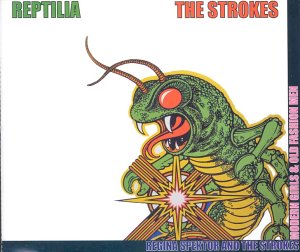
Recorded during the Strokes' 2003 Room on Fire tour and released in May 2004 on CD and 7" vinyl; the B-side "Modern Girls & Old Fashion Men" features vocals by Regina.

Saturday, May 01, 2004

Early 2004 - Soundgirl.com

LINK
Soundgirl has been a fan of Moscow native Regina Spektor since way before those mop-headed Strokes boys introduced her to the world. When we first met her, her free gigs were so intimate you could see if she shed a tear, ('cept we don't recall her crying. It was us who silently wept, marveling at the depth of her cat-like voice and the beauty of her ominous songs.) Some time after our tears dried, Regina became a part of a much higher ticket when New York neighbors, The Strokes, generously took her one-woman show on the road for a triple bill that included the rockin' Kings of Leon.

Each night, the threesome played to between 3000 and 6000 audience members. Soundgirl recently caught up with Regina. (And this time, we kept our composure.):

Soundgirl: What's been happening over the last year?

Regina: (My life) has changed in that I've had all these new experiences. I've met a lot of new people. I went on my first ever tour and then I went on my first ever second tour... I kind of realized how I overworked myself. Now, I have to try to be a professional. I have to pace myself and try to conserve my strength.

SG: How did you overwork yourself?

Regina: Not having gone on tour before --and we were out for basically more than two months-- it really hit hard. I didn't know how to take care of myself on the road really well. I didn't sleep. Stuff like that. No one was standing over me, telling me, "Don't not sleep for four nights in a row!"

When I went out with The Strokes in America, it was a triple bill with me, The Strokes and The Kings of Leon. By the time we hit the West Coast, they (the Kings of Leon) already knew of their tour in Europe, and they liked playing with me. So they said, "Why don't you come to Europe with us right after this?" So I had a four day break between tours during which I had bronchitis. I was on antibiotics when I flew to Milan.

SG: Were you the only girl on tour?

Regina: Yes. In a way it was fine. In some ways it was a little bit hard. I get along really well with both sexes, so I think when it comes to music it's not about that at all. These were all musicians who I really liked their music. You have to go with people whose music you'd want to hear every night. It probably would've been nice to have a few women there, though.

It was really awesome being on the road with the Kings of Leon because I was traveling on their bus. But I was so the sister of the band! The oldest one is my age. The youngest one is so young, like 17. He's just a baby. They're all brothers.

They're three brothers and two cousins. They're really like a family, and took me in like family.

SG: How did the audiences react to such disparate music?

Regina: Well, ya know, it was different. Sometimes on The Strokes' tour people were really, really kind. People would send me emails and say things like, "This was the most awesome opening band The Strokes have ever brought. I respect them for bringing me on the road.

SG: What was the rudest thing that an audience member said?

Regina: I don't know. Show us your **! I'm not much of a lady. I curse like a sailor, I'm tough in some ways, but I think there's a certain basic decency that I expect. Just because someone doesn't like something a person is doing, why yell something rude in front of thousands of people? It doesn't make any sense. A lot of the fans wouldn't like my music. It's very different. It's not up every Strokes fan's alley. I really respect The Strokes for standing by me.

SG: What now for the future?

Regina: I'm really excited to find a home, like a label. I really want to start working on my next record. I want to do a lot of collaborations and find new people to collaborate with.


Listen to "Your Honor" here to hear the passionate Regina and Visit www.reginaspektor.com to stream her second album, SONGS, in full.

2004-05 Spin

Unable to display PDF file. Download instead.

Kitsch and Tell

If you skipped the beer line and took your seats early for the Strokes' U.S. tour last fal, you might already be aware of precocious singer/ pianist Regina Spektor. Perhaps you've turned over the Strokes' last sin- gle "Reptilia" and heard Spektor's duet with Julian Casablancas on the art-wavey B-side "Modern Girls & Old Fashion Men." (It's probably a CD, so don't realy turn it over, okay? It totally won't play.) After watching Spektor perform the smart, minimalist story-songs "Poor Litle Rich Boy" and "Your Honor" from her indie album Soviet Kitsch in a tiny Lower East Side club, Casablancas was smiten and invited her on the road. But you probably know nothing about Spektor aside from her connection (one that is also rumored to be romantic) to New York City's favorite rock boy. "It's so ridiculous," Spektor says about the gossip. "The music gets lost in weird speculation. Why can't somebody bring some- one on tour because they like their music?" Okay, here are the facts: Spektor, 24, was born in Moscow, where she studied classical piano. She moved to New York City at age nine, attended SUNY Purchase, and performed in the same anti-folk scene that spawned the Moldy Peaches. She's an Aquarius. She talks like a baby and sings like a teenage Patti Smith. A major label wil be re-releasing Soviet Kitsch by the time you read this. "People think 'girl and a piano,' but I do open for rock'n'roll bands."

Sunday, April 18, 2004

2004-04-18 Dallas / Ft. Worth Star-Telegram

LINK

Working on Spektor


By Jeff Guinn
Star-Telegram Staff Writer
During the Strokes' tour this year, fans of the chart-topping band had to pay a hefty price to get into the concerts. So did the opening act.

"I was so lucky that the Strokes asked me to open for them," says 24-year-old Regina Spektor. "But I'm not on a label, so there wasn't anybody to cover my travel expenses. I got paid for the shows themselves, not the plane tickets or the hotels. Every day on the road cost me a lot of money."

So Spektor ran her credit cards -- and her parents' credit cards -- almost to the limit. Now back in New York City, she's paying off her tour bills and shopping a completed album to any label willing to let her stick to her quirky, multidimensional musical style.

This is one of the reasons that Spektor, a Russian emigre who arrived in the United States with her family when she was 9, has had trouble snaring a label: A leader of New York's subversive "anti-folk" movement, she takes offense at what passes for mainstream pop today -- almost as much as she's disinterested in more sophisticated, jazz-influenced artists such as Norah Jones.

Spektor very purposefully doesn't want to be "a pretty, folky songwriter," she said. "[Norah Jones] started in New York, playing the Living Room, which is about that kind of music. I've played there, but mostly I've played the Sidewalk Cafe, where the music isn't so much formula. When I listen to Norah's music, there's nothing there that surprises me."

Spektor, more than anything, wants to be surprised by music -- and believes that real music fans do, too. She figures she just has to keep plugging till they find her.

"You have to be protective about what you do," she said. "I want really intelligent lyrics and, even if I'm not writing actual punk songs, at least songs with a punk attitude. I want songs that surprise you, songs that sometimes are purposefully annoying."

The tunes on her third, and latest, self-published album, Soviet Kitsch, reflect that ambition. Each song, often driven only by Spektor's piano and her amazing, now-a-growl-now-a-croon voice, has three or four distinct sections that graft to form storytelling wholes. Ode to Divorce finds an aggrieved party suggesting she be broken up into small pieces and devoured by a former spouse ("Now I'm behind your tonsils/Peeking over your molars"); in Us, blissful lovers have a statue erected in their honor but discover that the statue's noses are rusting, just as their real-life love is beginning to fall apart.

This is music-making that just isn't being done these days -- at least not on Top 40 radio, which might have been one of the reasons she occasionally got a hostile reception when opening for the Strokes. She was invited on the tour after a member of the band's management heard some of her songs and introduced her to the group.

"Obviously, the people who buy tickets to a Strokes show want to hear them and not somebody else," Spektor said. "I got tougher toward the end of the tour, but a couple of nights, I ran offstage when I was done playing so nobody would see me cry. A more experienced performer wouldn't take it personally. Now, obviously, I want to tour on my own, and I hope if I get on the right label that will happen pretty soon."

Another longed-for moment has already arrived; Spektor has moved out of her parents' house.

"I lived there with them because I just had to," Spektor said. "It's tough making a living as a musician without a label. They live in the Bronx, most of my shows are on the lower East Side, so I'd always have to worry about getting home after I was done. Now I've got a little place of my own and it's great, and I can only afford it because a friend of mine hooked me up with a super break on the rent."

While she waits for a label deal, Spektor reminds herself "that I've been pretty lucky so far, and once I get that label support I can do even more. And when I do tour it'll be exciting, even if there are just 15 people there -- because they came to see me, not another band."


Jeff Guinn, (817) 390-7720 jguinn@star-telegram.com

Friday, April 09, 2004

2004-04-09 Washington Square News

Unable to display PDF file. Download instead.

LINK

From Russia with love


by Vicky U Lee
STAFF WRITER

New York's best unsigned singer-songwriter has lost her voice.

After recently celebrating her 24th birthday, Regina Spektor woke up unable to make a peep - but with good reason to make merry. Though still relatively unknown, the talented Spektor has been generating quite a buzz lately. In the past few months, she's been featured in NME magazine and on National Public Radio. Add to that the fact that 2004 is the Year of the Monkey - her personal Chinese astrological sign - and you've got quite the fête at hand.

As the loss of her voice was the latest and greatest of many scheduling obstacles, we agreed to an e-mail interview.

Generally dreaded by artists and journalists alike, an e-mail interview has one benefit: the opportunity to observe how someone turns creative spelling into a written "voice" - Spektor's typing calls to mind her stage banter, which borders on cutesy but still comes off as genuine.

As for the less purposeful spelling errors: she's a musician by trade, not a spelling bee champion. There's a reason why she can spell "Tchaikovsky" but not "maintenance." Nonetheless, listening to her sing at the piano, one can't help but be spellbound.

While developing her unique piano-pop sound in the Lower East Side's anti-folk scene at venues like Sidewalk Cafe and the Living Room, the Moscow-born, Bronx-bred and classically-trained Spektor found a fan in Gordon Raphael, producer of both of the Strokes' major label efforts.

Raphael, in turn, introduced her music to the Strokes, and voilà: they offered her the opening spot on their fall 2003 U.S. tour. Following the Strokes' tour, Spektor spent a month opening for Kings of Leon in Europe. How did she spend her first day of 2004? In Las Vegas playing a New Year's show, sharing a bill once more with the two bands.

Granted, hipness by association is only so valuable. But Regina Spektor warrants the buzz. She is one of the few talents whose lyrics match the brilliance of her musical composition.

Like Adam Green, but better, Spektor can often catch you off guard as you listen intently for the next word, unexpectedly drawing out the laughter hidden behind your newyorkais apathetic composure. She has a command of musical structures, of rhythms, of the infinite possibilities - and consequences - of sounds and silences, that many pop artists never know.

Spektor began to play classical piano at age 6, but her studies were cut short by her family's departure from Russia, then still the Soviet Union. Once the family had settled in the Bronx, Spektor serendipitously met a Manhattan School of Music professor, Sonia Vargas.

After playing with Vargas' four cats and two dogs, Spektor asked Vargas to be her teacher - much to the chagrin of Spektor's mother, who knew the family couldn't afford the lessons. Vargas cheerfully agreed to teach Spektor for free even though she "didn't even know English that well and had no piano!"

Thriving on the creative energy at SUNY at Purchase's music conservatory, Spektor completed and released her first album, 11:11, by graduation.

Jazz and blues clearly influenced the 12-song LP. An upright bass plays rhythm games as Spektor slides and bends her voice on tracks like "rejazz," and the heavy pounding of tinny chords in "Back of a truck" drags listeners through a detached narrative until the blues she observes in others become her own.

But after spending more time with the music of Tom Waits, Radiohead and Björk, Regina resolved to leave imitations of Billie Holiday behind and concentrate on hunting down her own style.

Spektor wrote that while "many early [songs] are cringe worthy," for her, songwriting is "evolving ... among other things," a constant process that has carried her sound from her "prenataly" deep classical roots through jazz, blues and folk to her current musical singularity, where every word, every note, every silence serves to tell her songs' stories.

By her count, she has written upwards of 200 songs, though she acknowledged that "not all are good/ever performed" and "many are lost and forgotten." With a different set list at almost every live show, she has performed around 90 or 100 songs since she first started to write.

"The new one is always the brief favorite, whatever it is ... so my next song will be, and now my last one is ... but i go round and round, i love a song, then return to it and fall in love again, i definately feel responsible towards them like you would towards a child, no matter how talented it is/how smart it is/ how it looks - you care for it and hope it does the best with what it has."

Her "kidz" range in personality from carnivorous murderesses ("Marry Ann") to flirtatious pickles ("Reading Time with Pickle"). And there are, of course, some that are personal ("Patron Saint," "Samson"). But as with all art, she can only speculate about their significance, insisting her ideas "are as good as anyones."

Spektor followed 11:11 with Songs and then Soviet Kitsch. Both provide audiences with a better idea of where Spektor is directing her sound, though it seems unlikely she'd ever limit herself to any genre. Songs includes a butterfly peddler's lament, "Aching to Pupate"; a nod to Mozart's Requiem, "Lacrimosa"; and closes with a very upbeat plea to her French lover, "Ne me quitte pas."

Soviet Kitsch highlights the totally punked out "Your Honor," introduced by Spektor's younger brother, Bear. And yes, that is his real first name. As if Spektor weren't a cool enough last name as it is.

She sandwiches her punk-rock moment between "Ode to Divorce," a melodic introduction reminiscent of Romantic composer Claude Debussy, and the melancholy "Somedays," with a smattering of piano-pop in-between.

Most recently, Spektor contributed to the B-side of the Strokes' latest single, "Reptilia." "Modern Girls & Old-Fashioned Men" is a rock duet, somewhat of a rarity in music today. But Spektor has brought something different to the Strokes' disappointingly stagnant sound with her vocals against Casablancas' in the Strokes' first noteworthy B-side.

As for the next album, she cited David Bowie as a major influence. One can only hope to see the polished production that would kick her songs up from impressive to glorious pop.

The last question of the e-mail interview asked Spektor when we could expect the next album.

Spektor's reply was only: "???????????????????????????????????????????"

And I swear I did not delete or add a single question mark. •

Thursday, April 01, 2004

2004-04 Paper

Unable to display PDF file. Download instead.

LINK

REGINA SPEKTOR

THE EX-COMMUNIST DAUGHTER

IF YOU DISCOUNT THE STETHOSCOPE she's wearing around her neck, Regina Spektor looks exactly like she stepped out of 19th-century Eastern Europe—her head wrapped in a kerchief, legs swaddled in skirts, her light Russian accent betraying her foreign birth. The 24-year-old singer- songwriter is a Soviet émigré whose fami- ly left Moscow and moved to the Bronx when she was nine. That helps explain the title of her third album, Soviet Kitsch, an 11- song collection of piano ballads with ima- gist lyrics like, "I'm inside your mouth now, behind your tonsils, peeking over your molars." (She's a fan of literary funnyman Nikolai Gogol.) Her poetry is beautifully strange, but then so is Spektor. "So many people believe that their lives are art-worthy," Spektor says. "What happened to imagi- nation? I want to write a song from the point of view of a pirate living in the slums of Barcelona."

Laying claim to an interesting life is hard for most, but Spektor has little difficulty. After fleeing communism for religious free- dom (her parents were unable to practice Judaism under Soviet rule), the pianist continued her classical-music education Stateside. Eventually, she fell in with the anti- folk scene centered around the East Village's Sidewalk Café, and she developed her pop- song-writing skills. As luck would have it, the producer of Soviet Kitsch was simulta- neously shaping the Strokes second album. He introduced her to Julian and the boys, and the downtown rock stars took her out on tour with them. Now she's no longer an unknown quantity. As for the stethoscope, it's more than just oddball taste in jewelry. "A friend gave it to me for my birthday," Spektor says. "It's so I can always listen to my heart before I make decisions." * Jonathan Durbin • REGINA WEARS MAKEUP BY RIMMEL.


photographs by Torkil Gudnason